


My six-week writing workshop, Heart-Centered Writing Intensive, which starts next week, is nearly sold out! If you’re interested in the final space, please sign up here.
I am full of want, I thought as I sat on my couch last week, an urgent list of everything I wanted rushing out of me. Desire and longing so strong, so vivid, I thought the intensity might stop my heart. But I also knew that stifling it—as I’d done for so long due to health challenges that render much of my longing unattainable—would cause my heart to shatter into a million teensy, weensy pieces. And that seemed worse. A stopped heart can be cajoled back into life; a heart in a million teensy, weensy pieces cannot. So with Delilah curled on one side of me and Rudy Lu curled on the other, I shouted out my longings.
It was wonderful to expose them to the light of the world. I felt like Alice after she finished the “Eat Me” cake and was suddenly too big for the room.
I won’t bore you with the list. It went on for a while. Some wants for me. Some for loved ones. Some for the animals and planet. Some for all.
I know I am not alone in wanting. Our world is driven by want. The want of materialistic desires, yes, but also the want to relieve suffering for ourselves, others, the planet and her animals. In many religions, want or desire is considered the source of the very suffering we want to relieve, or even evil. But good or bad, what came to life for me that day on the couch was how much I had suppressed mine.
I can trace how I got here. When I was at my sickest, I was in nonstop survival mode, the deepest and thickest of which lasted well over a year. Even now, I have not completely left it behind. I face daily health challenges. And I have trauma from all that I’ve lived through, which can be triggered far too easily (don’t get me started about my sleep trauma, so vibrant in my body still, even though I’m largely a good sleeper these days).
I imagine many of you can find yourselves in this, even if your survival mode wasn't triggered by physical health issues. Survival mode, by definition, does not allow for wanting or desiring; your focus is simply on getting yourself from one moment to the next. It’s an exhausting and often terrifying way to live. Your nervous system, your adrenals, your hopes for yourself, your dreams, your desires—they all get blown up. Boom!
I talked myself through so many seconds and minutes and days and weeks and months and years: Put the bread in the toaster. Push the lever down. Put the kettle on the ring. Light it. Entire days spent narrating to myself that precise moment because the chaos in my brain and body was so extreme, I couldn’t have functioned otherwise.
In a sense, the force to stay alive is a form of wanting. The most primordial want there is. But I’m thinking here of more pleasure-oriented or even ego-driven desires that are necessary for a rich life: companionship, stability, travel, sex, success, romance, mischief, recognition, adventure, community, et cetera. Survival mode offers no space for these. When you are trying to simply make it through the day, it’s not possible to imagine birthday parties or weekend trips or publishing a book or having dinner with friends or falling in love—and the unfathomable pain of knowing this is too devastating to consciously carry, so better to go without wanting.
Of course, I’m not talking about the Buddhist practice of freedom from attachment to the stickiness of life that requires acknowledging your desires. I’m talking about a masterful suppression of want in order to survive. A necessary denial. I’m grateful I was able to achieve this; otherwise, my yearnings may have eaten me alive.
All these decades later, my health is much improved. Though I still struggle, I’m far more engaged with the world. This can be a delicate and confusing balance. In the opening paragraph I wrote, “as I’d done for so long due to health challenges that render much of my longing unattainable.” And this is true. And yet, it’s not the same truth as the years in which it was laid. Has my want-suppression become a habit? One I’m not entirely sure how to break?
That which saves us in one phase of our life can inadvertently harm us in another.
I need far less shielding from my longings than I did in those dark days, when my eighty-year-old father had to move in with me to help me—which is a joyful sentence to write. Yet embracing my hopes for myself, hopes that aren’t solely regarding physical improvements, has proven to be a complicated matter. One complication is what if I am healthy enough to want again, to shout my dreams from my couch, and none of them come true? Have I lost my excuse for failure? Over the many years, have my health struggles become protective?
Whenever I write about my struggles, I always want to mention how deep my gratitude is for all that I have. I have so much. The What I Have list far outweighs the I Want list. Even at my darkest, I never lost my gratitude: it’s my root system from which all else grows. I am lucky to be so blessed.
And yet, the lack of many of the things I desire would chalk up points on the Holmes-Rahe Life Stress Inventory: companionship, romance, success, financial stability, and, of course, good health. I’m guessing many of you would score points, too. Gratitude and wanting can co-exist.
So what do we do with our wanting?
Growing up, if I wanted something I couldn’t have, my mom would remind me of what my grandmother, who died before I was born, used to say to her when she wanted something she couldn’t have: “Wish in one hand and shit in the other and see which gets filled first.” It’s a vulgar old Cockney adage that popped into my head as I contemplated how to end this essay. Whilst wish and want both address desire, they’re not the same. I knew my own perceptions, but looked up various definitions: a wish is a desire that is unlikely to happen, whereas a want is something that is actually possible. And in truth, as I sat on my couch and shouted out my wants, they did seem possible, with some action behind them. And that possibility filled me with hope. As we enter this new year, leaving behind a year of mangled wants, maybe hopeful wanting is a good first step.
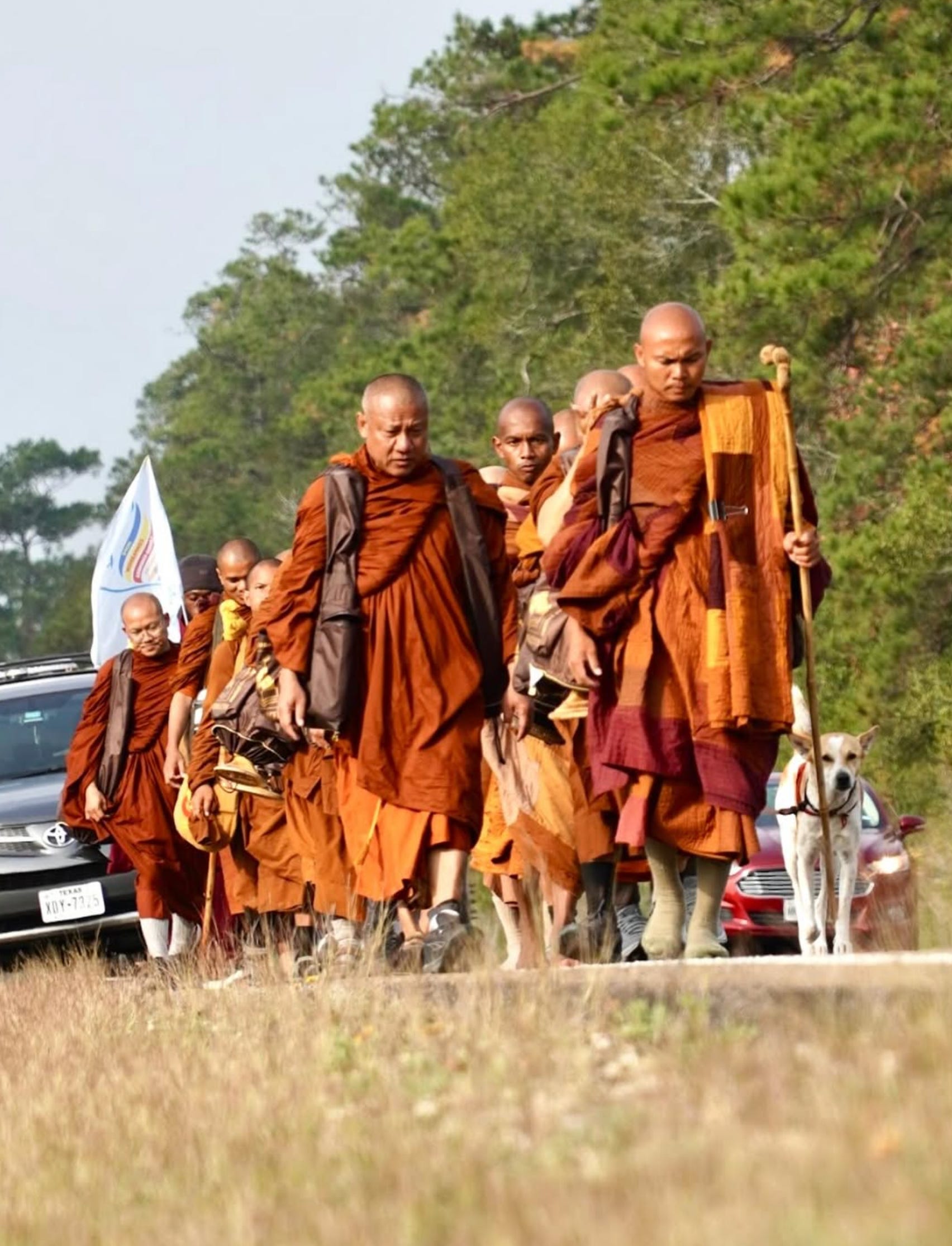
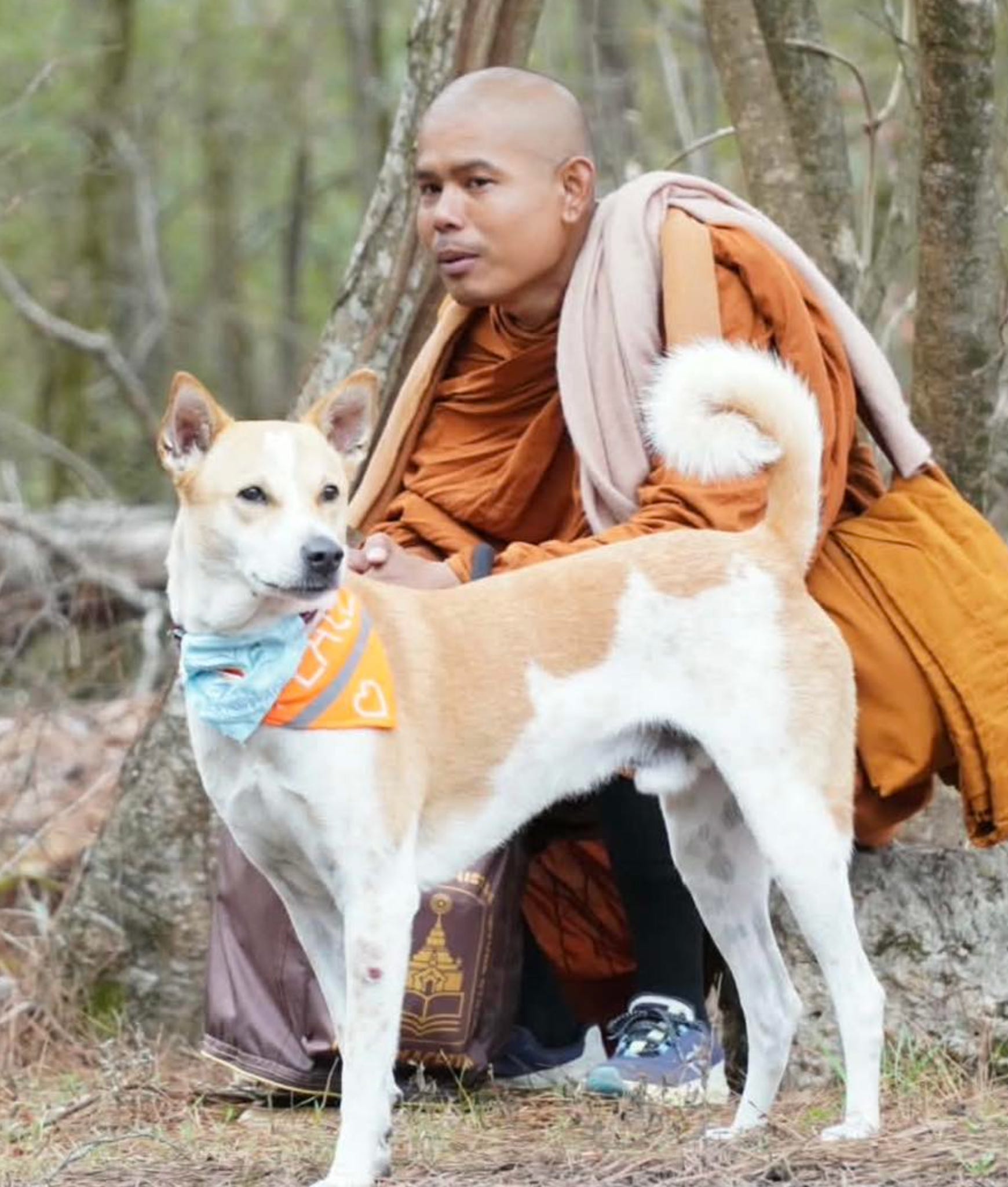
Pam Houston recently shared in Notes about Walk For Peace and Aloka the Peace Dog. And I’m so glad she did. Pam wrote, they are “a reminder that there is still so much good in the world even though those in power would have us believe otherwise.” I couldn’t agree more. The monks and Aloka have already soothed my soul considerably and reminded me of the potency of kindness, determination, and putting one foot in front of the other.
I love this version of This Little Light of Mine sung by the incomparable Odetta & The Holmes Brothers.
Friends, let’s let our light shine in 2026! And shine and shine and shine. Our planet needs us, the animals need us — and we need each other!
❤️ Thank you to everyone who’s joined this beautiful community devoted to bringing as much light as possible into this world of ours. If you enjoy what I publish, I’d love your support. Beyond is my heart’s work and it’s also a lot work; plus, I pay guest contributors. If you find yourself here often, please consider becoming a paid subscriber. And deep gratitude to those of you who already are. ❤️
If you’d like to support my work without a subscription, here’s my link to Venmo and Paypal. ⭐️
If you enjoyed this essay, you might also enjoy this one about music as a form of hope:

How are you feeling about the new year? Any hopeful wanting? How does it feel to want? How does it feel to be hopeful? Let us know in the comments!
And if you enjoyed my essay, please hit the heart button. It feeds the algorithms that help keep Beyond afloat and also keeps me afloat!
Thank you, Jane, for this bright spot today. And for the reminder that hopeful wanting is still possible, even if it feels far away. Xoxo
Jane, such a raw, vulnerable and touching piece today.
“Even at my darkest, I never lost my gratitude: it’s my root system from which all else grows.”
When I read that, I thought, how could Jane lose her gratitude, for isn’t gratitude sourced internally? And then I thought about how I often lose ‘touch’ with my gratitude and once reconnected with it, my well being improves.
In reading you essay this morning I realized I've been disconnected from my gratitude a bit and I’m grateful that through you I’m now reconnected to it 🙏