
Everything Feels Boundaryless: A Conversation with Megan Falley, Part One
On dogs, communicating with beloveds who have died, grief as a return to poetry, carrying one another, and crying because of love.


⭐️ Click here to get the full enjoyment from this post by reading it online!
Intimate conversations with our greatest heart-centered minds.
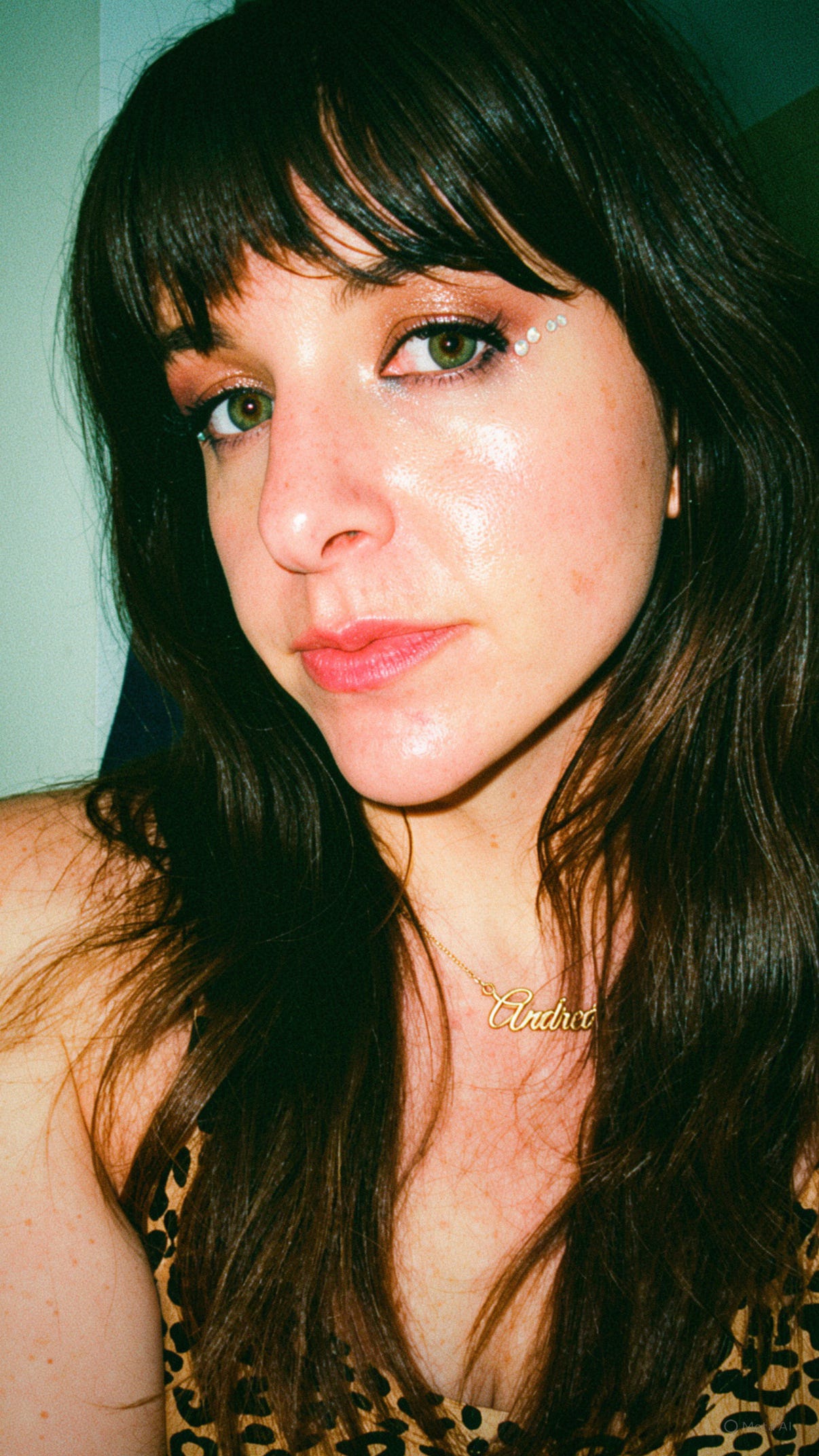
I love megan falley’s brain. For one thing, she’s deeply curious. And I have a soft spot for deeply curious beings. She’s also wicked smart. And when I say thoughtful, I mean she really ponders things. Like matches them up fifty different ways to discover what most resonates for her as truth, as wisdom, as beauty, as hope, as kindness, and as a necessity for being electrically alive.
I also love Meg’s heart: the openness, the devotion. You can feel it radiating, even through Zoom. Read anything she’s written: you’ll feel it there, too.
Together, Meg’s brain and heart form a gentle, potent magic that’s grounded in respect, awe, and a pure, unique lens on the trappings of reality.
Meg began her writing life as an acclaimed, often-touring slam poet. She’s published four gorgeous books of poetry, most recently Drive Here and Devastate Me. She co-wrote How Poetry Can Change Your Heart with her partner of eleven years, Colorado Poet Laureate Andrea Gibson. Meg is also an essayist; the stunning essay “The Act of Vanishing,” about Meg’s summers as a child at fat camp, won her first place at the Tom Howard/John H. Reid Fiction and Essay Contest in 2021. She’s currently working on a much-anticipated-by-thousands-and-thousands-and-tens-of-thousands-of-us memoir.
In 2021, Meg’s wife Andrea Gibson was diagnosed with an aggressive and then incurable cancer. Meg became Andrea’s everything, caring for them with such devotion, tenderness, fierceness, completeness, honesty, and full-heartedness that it was breathtaking to behold.
The final year of Andrea and Meg’s journey together (in this incarnation!) was chronicled in the hope-affirming documentary Come See Me in the Good Light. It was nominated for an Oscar! If you haven’t yet seen this beauty, you must.
Andrea died on July 14, 2025, but not before cracking open the heart of every person they encountered. Meg is now writing what was Andrea’s newsletter, Things That Don't Suck. If you don’t already subscribe, I encourage you to do so now. Your heart, your mind, your life will never be the same.
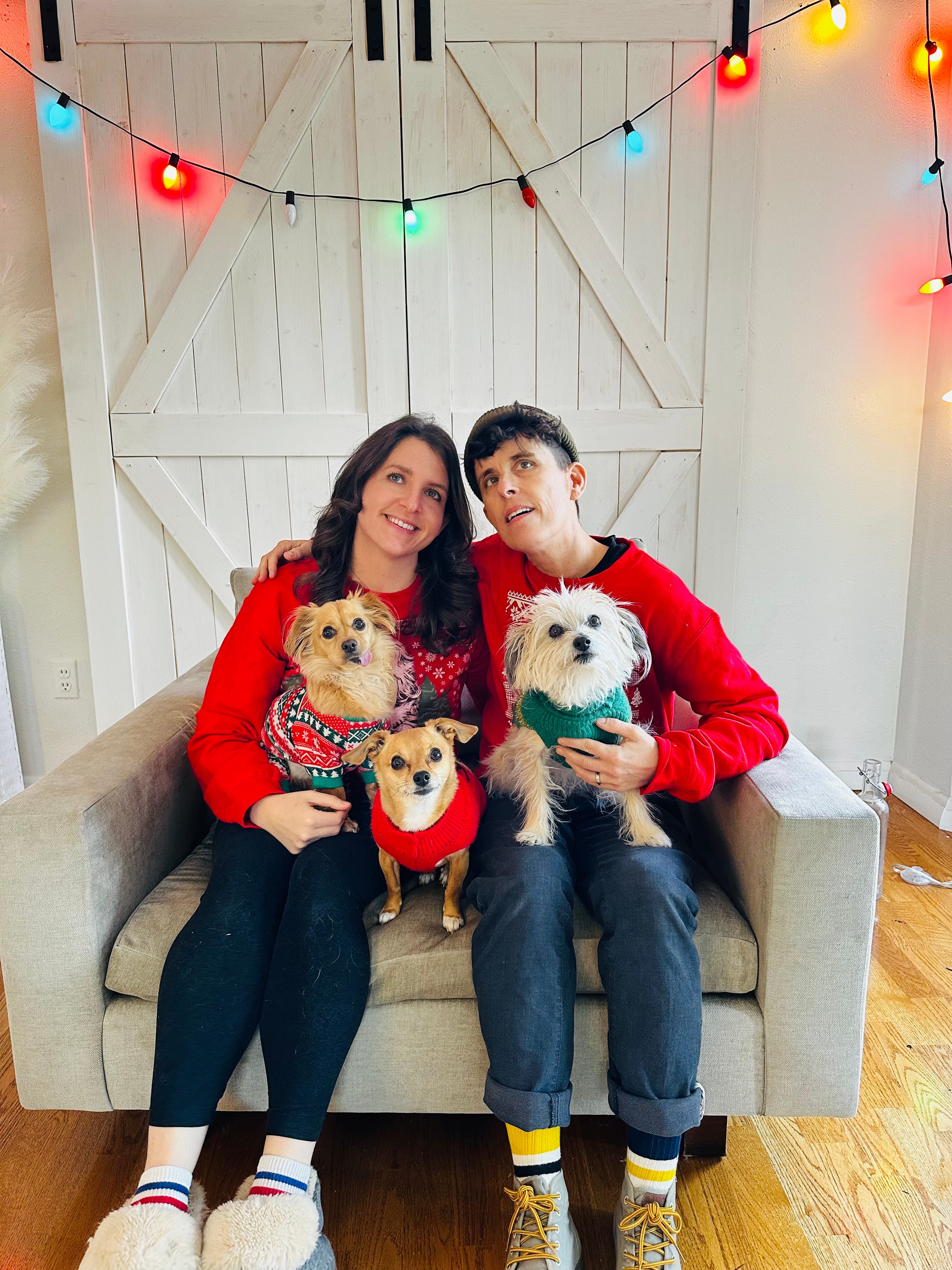
Meg lives in Colorado with the three beloved dogs she and Andrea shared.
I enjoyed speaking with Meg so much that we talked a lot; this interview is a two-parter. Part Two will post tomorrow. Craft Advice will post next week.
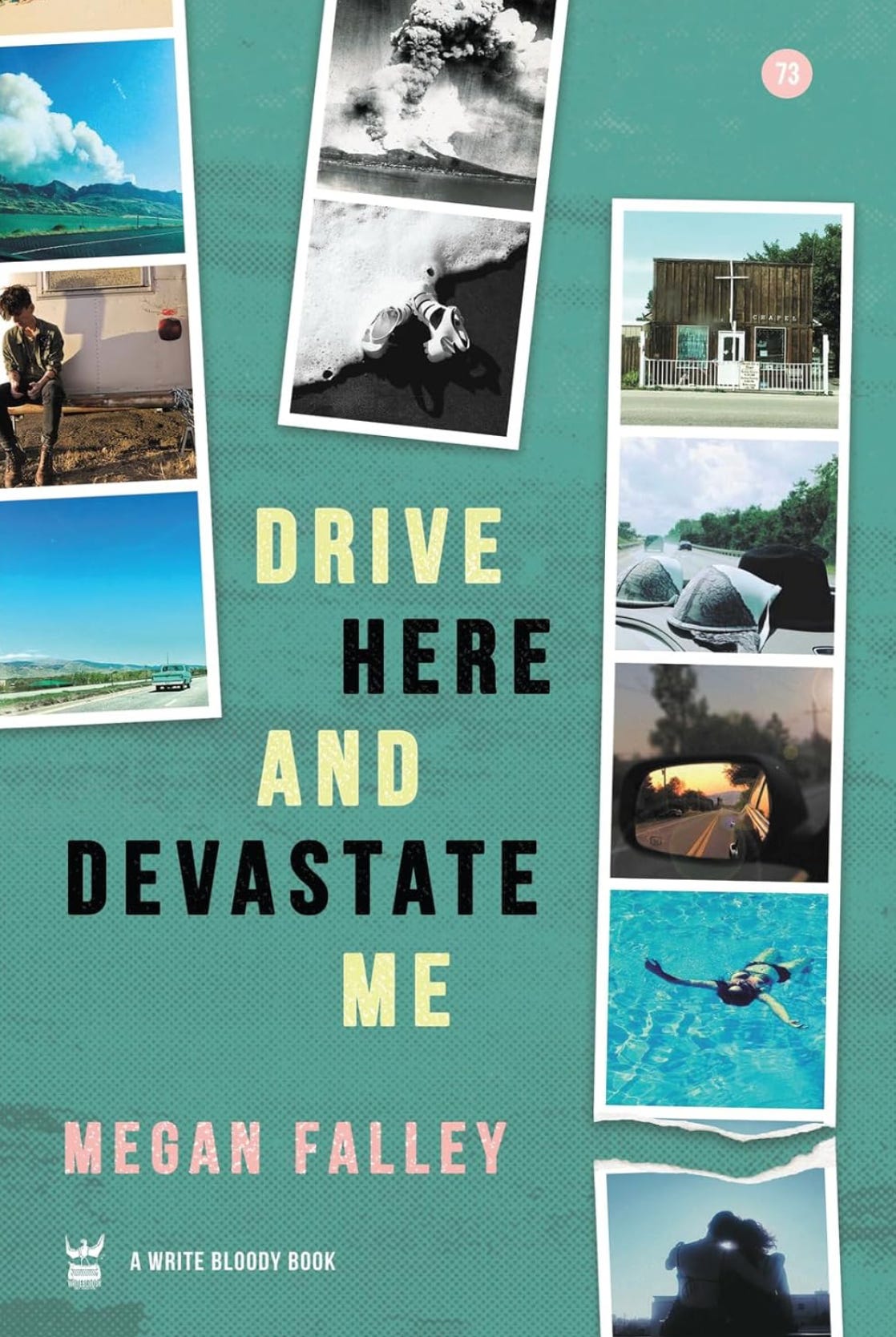
⭐️ Megan is generously gifting three readers an autographed copy of Drive Here And Devastate Me! If you’d like to be one of the recipients, please add “DRIVE” after your comment (ALL CAPS makes sure I don’t miss it). The winners will be chosen at random on Monday, May 25th and notified by Substack Direct Chat. (Shipping is limited to the United States) ⭐️

When I spoke with Andrea, we started the interview talking about the three doggies who you live with: Squash, Winnie, and Idgie. So I thought we could start there, too. I know you feel like Andrea is now a part of you. Do you feel like they are also now a part of the dogs?
Oh gosh, I haven’t really thought about it that way. I mean, Squash, definitely. Squash is going to be fifteen in August; she and Andrea share a birthday. She’s always been an extension of Andrea to me. She’s old and doing well, but I do think about how losing her will feel like another loss of Andrea, because they were so connected and dear to each other.
Is Squash the one Andrea wanted to be there with when she died?
Yes. Now that we’re talking about them, I have to hold Squash. She just had twenty-three teeth removed. She’s got five left. When Andrea was dying, I had all the dogs in bed with us; I didn’t sequester them to another room. I wanted them to understand as much as possible, and I think that they did. So they’re really well adjusted to it all.
Are they all still sleeping in bed with you?
Oh my god, of course.
In the documentary, you mention a few times how you’re living your life in three-week cycles due to Andrea’s blood tests for cancer markers. What’s the rhythm of your life like now?
It’s been like an experimental jazz rhythm. I hate experimental jazz but I don’t mind it as a life rhythm, I guess. The 14th of the month always feels pretty potent to me, because that’s the month marker of Andrea’s death. So tomorrow’s the 14th [Meg and I spoke on April 13th], and that will make nine months. Nine months feels like a particularly wild number, because when I think of nine months, I think of the time it takes to make a baby. And how weird it is that, theoretically, I could have created a life in this time after walking Andrea to the end of their life. It feels very bizarre.
Also, the rhythm of my life post-Oscars, up until these last couple of weeks, has been really chaotic: traveling and touring and promoting the film. A ton of different time zones and countries and planes.
Has being home again shifted the grieving process at all?
After Andrea died, I was in constant communication with them in profound ways. When I was touring, some of that continued, but I was so immersed in Andrea, their story, their message, and seeing their face on screen.
Now that I’m home, I’m running Andrea’s business with their best friend, Emily, and Andrea’s final performance at the Paramount is going to premier at Red Rocks in Colorado on July 5th. The Colorado Symphony will be there, playing the music live that accompanies Andrea’s poems. I’ll be performing, along with Sara Bareilles and Chris Pureka. So I’m still very immersed in them. But I wasn’t hearing from Andrea as much.
Then I had this incredible thing happen where I realized that there was actually a responsibility on my end to try to communicate with Andrea, not just listen and wait. So I’ve been working with that, and it’s been really powerful.
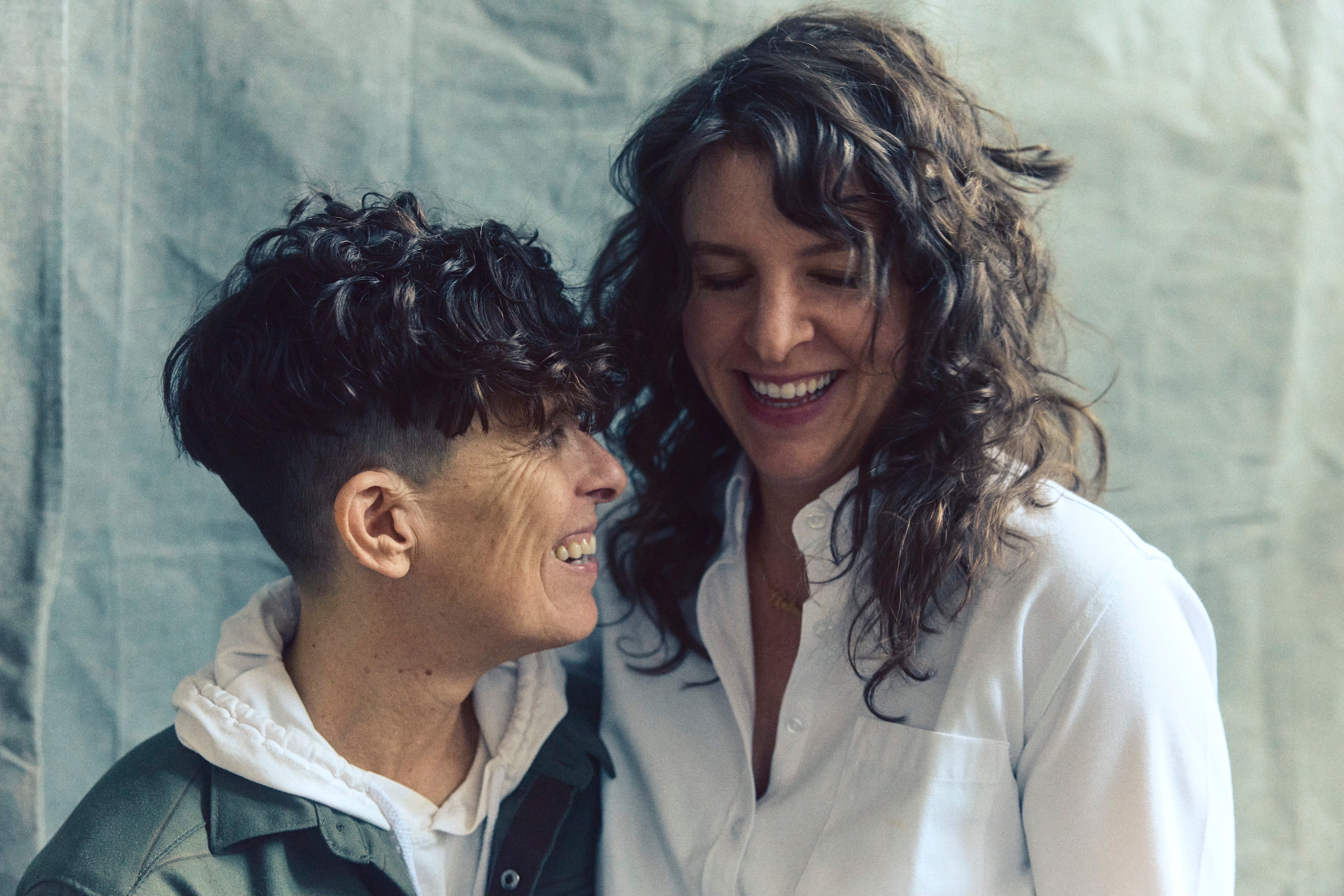
You’ve said that rather than letting go of Andrea, you’re learning how to feel into the plane where letting go doesn’t exist. Can you speak more about this, not just in terms of Andrea, but also in terms of how you are now perceiving the world and our interface with other realms?
I really enjoy living in an I-don’t-know place. I also enjoy being around people who live in an I-don’t-know realm. I’m turned off by anyone who feels certain about stuff that we can’t be certain of. Andrea said they wanted to live in the mystery. And I do feel like I live there often.
Andrea was definitely the more woo-woo of us, but there were too many wild things that happened after their death for me not to feel very communicated with, and like something was possible in that way. I definitely don’t feel like I’ve reached all of the bounds of it, but I’m kind of wondering if I should just tell you this story.
Yes!
Essentially, ten years ago, I fell out of love with poetry. I realized that the spoken word slam community wasn’t one of kindness in the way I had thought it was. It was hard for both Andrea and me. We both fell out of love with the community in general. Andrea, maybe not the art form, but I fell out of love with it and moved into prose.
The other night, I was in a yoga class, and crying in half-pigeon pose, as one does, and realizing that I hadn’t felt visited by them in this specific way that I had been. Then I got this image of Andrea salting a tomato. They would throw salt everywhere. I would clean it up and be frustrated, like, “Salt it on a plate.”
But it came to me as such an image that I saw it almost as a poem. This message accompanied it, which was like, “You can find me through poetry. You can write poems. You can find me that way.” Who’s to know when we have a thought coming to us, if it’s our thought or from somewhere else? But it didn’t feel like my own thought, because I didn’t have any interest in writing poetry. The next night, I came home, and I wrote a poem about Andrea salting the tomato this way, and it felt really nice to dip my toe into creativity and connect with Andrea a bit in that way.
So for a few nights, I was writing poetry. My friend Stef was over, and I said, “Stef, we’re going upstairs for twenty minutes. We’re going to write.” I had no idea what I was going to write. I’m just scribbling, thinking about Andrea’s death, crying a little bit.
My friend Olivia recently told me she was babysitting for this little girl, and this little girl’s atheist parents asked her, “Where were you before you were in mommy’s belly?” And she says, “I was waiting to be picked.” And her parents said, “What?” She’s two and a half.
So I wrote that story down, and then I wrote, Maybe death is like waiting to be picked for God’s team. Then I wrote, Of course, Andrea was drafted early: they were so talented, so promising. Andrea went to school on a basketball scholarship. They loved basketball. That was their favorite thing to do, to play, to watch. Not everybody knows this. So, I wrote this line about Andrea dribbling stars and dunking Mars through a hoop of Saturn, and then spinning the world, the globe, on their middle finger, like how a basketball player spins a ball.
As I was writing, I fell completely back in love with poetry. I thought, I can’t believe that I can, in a matter of moments, write this image and make it come alive. I can see Andrea doing their favorite thing, basketball, in their favorite place, outer space. With prose, I would need to set it up, and there would need to be so much, but with poetry, you trust that the poem can be a rocket ship. And it might not be so long, but it will go deep.
What’s your relationship like with Andrea these days? Have you learned new things about them? That’s happened for me a lot after people die: the relationship keeps going, and I know and understand them differently.
In many ways, I still feel like I’m caregiving for Andrea. At the top of my mind at all times are their wants and how I can facilitate the things they wanted to continue. But I feel now that they’re able to take care of me in the way that they always wanted to and couldn’t when their body was an obstacle. So that feels really beautiful.
More and more, I feel like experiences are beyond words, but can you articulate what you mean when you say Andrea’s now caring for you?
I think so. Andrea had chronic Lyme disease, so it’s not like their illness started with cancer. At one point, they had debilitating panic attacks, so we were in a caregiving dynamic before they got a sickness that was universally recognized.
Our life got very small with the pandemic—and this was pre-cancer—because we were scared of how it might impact their Lyme disease and their health. So for the last five years, Andrea and I never went anywhere. We went from this very big life where we were always touring, we were in a different city every night, and Andrea’s career was thriving. Then the pandemic shut all of that down, and cancer kept it shut down.
We still had an emotionally big life, but physically, we were here, or sometimes walking the dogs, or in the hospital. You can see that in the documentary: there aren’t many locations. I almost feel that, having done the documentary, Andrea put things in place for me to have this big life that they couldn’t have had. They couldn’t have toured with the documentary; they couldn’t have done all the things that my body can do. When I’m having these wild opportunities, like singing on stage with Brandi Carlile, these things that I never thought possible, there’s a large part of me that feels like all of those things are possible because of Andrea’s life, and also in some ways, Andrea’s death. It’s hard for me not to think that they had some quiet knowing that my life would have a richness to it.
You’ve talked about this huge change from being an around-the-clock caregiver to being a recipient of care. Another shift is that by necessity, your writing went on hold, whilst Andrea’s soared. But now your writing has a lot of light shining on it. Is this a piece of what you’re saying about Andrea being a part of that when they were alive, and even now?
Yes. Andrea would say that “all writing is plagiarized by the dead.” I think the words that they wrote were inspired by people who have passed, not in a sense of, “I’m going to write like Shakespeare,” but the thought of their grandmother’s soul and spirit moving through them.
I feel that often. There’s a legacy of Andrea that lives in me now, and probably always did. When Andrea was alive, I felt less of a responsibility to make sure that part of me was expressed.
A lot has to do with Andrea’s fan base, which is the most wonderful, accepting, loving, open, celebratory community ever. When I started writing for Things That Don’t Suck, Andrea had held those readers through life and through hard things, and now I’m holding them through the grief of losing Andrea. And they’re holding me. Everything feels boundaryless, in a good way. It’s not always clear what the line between Andrea and me is, or between me and Andrea’s readers. There’s a lack of possession.
Dang, that’s all so beautiful. Do you feel comfortable with all the light on you now?
Oh yeah, I’ve always been comfortable there. Much more than Andrea. Andrea had the nervous system of, like, six traumatized rescue chihuahuas, and I am comically unanxious. As much as Andrea appreciated someone stopping them on the street to talk, they also panicked. But this is a place where I’m pretty comfortable.
That’s great. When you’re thinking of Andrea in the relationship you two have now, is there someplace you’re imagining them? Do you think they’re in your body? Or do you believe in reincarnation? Or something else?
It’s not just one place. Early on, after they died, the most magnificent sunsets happened, and I pictured Andrea as this giant painter, painting them for me. On a smaller scale, when I’d have trouble falling asleep, I would whisper, “Put your arms around me,” and I could feel this sudden weight.
Maybe boundaryless is the word again: not feeling like Andrea’s always a particular size or shape.
In their poem, Love Letter from the Afterlife, there’s the line: I’m more with you than I ever was before, so close you look past me when wondering where I am. I often see them here in that way.
God, Meg, Andrea fucking loved you so much. What’s it like to be the recipient of all that love? And all these gorgeous poems and words that hold Andrea’s love for you.
I feel really lucky. Was I more loved than other people? I don’t know. But was I with somebody who really knew how to articulate love, which maybe sometimes feels like being more loved, because language is so important? Yes. I feel lucky that I was with somebody who was so emotionally in tune, and intelligent, and precise, and prolific.
And that it’s so well recorded. It’s not the time of pre-printing press or pre-video. There’s so much evidence. I’m grateful for that.
I think my favorite line in the documentary comes after Andrea’s show, and you’re holding them whilst they cry, and you say, “Are you crying because of love?”
It’s actually not quite an inside joke, but a thing between us, because when Andrea was originally diagnosed, they were crying a lot. But they were in a blissful, I would say enlightened, state for the first year after their diagnosis. I would run to the sound of their crying. Sometimes they’d cry because of pain, but then other times they’d let me know, “I’m crying because of love.”
So it became a thing when I would check on them: Is this the kind of crying where there’s something I can do to fix it, or are you crying because the world is so beautiful and you’re so happy to be here? I knew that’s why they were crying after that show.
That was a question I asked Andrea: how would you define love? What does that mean to you to be crying because of love?
Interestingly enough, for the most part, when I do cry, I’m not a big I’m-so-sad crier; I cry usually because I feel moved. Sometimes that can be joy or beauty crying because of love.
I think love and awe are really similar. And maybe presence. Like, are you crying because of presence? I would liken it to being on psychedelics. Whatever barrier we have to put between us and the world so that we can function and not be crying all of the time about how beautiful and amazing it is. Whenever something happens that evaporates that protective shell, I think that’s what crying because of love is.
Oh my god, that’s so beautiful.
⭐️Part Two of Megan’s interview posts tomorrow! See you there!⭐️
If you enjoyed this interview with Megan, you might enjoy this one I did with Andrea Gibson in early 2024, just as filming was starting for the documentary. It remains one of my favorite interviews:

Beyond is heart work—and it’s also a lot of work. If you can swing it, I would be so grateful to have more paid subscribers on board. ❤️
If you’d like to support my work without a subscription, here’s my link to Venmo and PayPal.
If you enjoy what you’re reading here, please hit the ❤️ button to boost Beyond in the algorithm. The hearts really do help!
 | A guest post by
|
The legacy of a person you love you first comes to you in its own specific way. For me and my mother, it is that morning sun, that soft warmness that hits you in the face telling you—today is going to be ok. Thanks for sharing your story.
DRIVE
The more I read Meg's and Andrea's words, the more I think they are revolutionizing love and life and death. I've never seen anything like it. Thank you for bringing them to us in these wonderful interviews, which complement Come See Me In the Good Light so beautifully. DRIVE