

Call It Love
The Body, Brain, and Books: Eleven Questions with writer and teacher Alice Elliott Dark

Welcome to another edition of The Body, Brain, & Books. If you enjoy reading these quick, insightful interviews brimming with wisdom and hope, please become a subscriber!
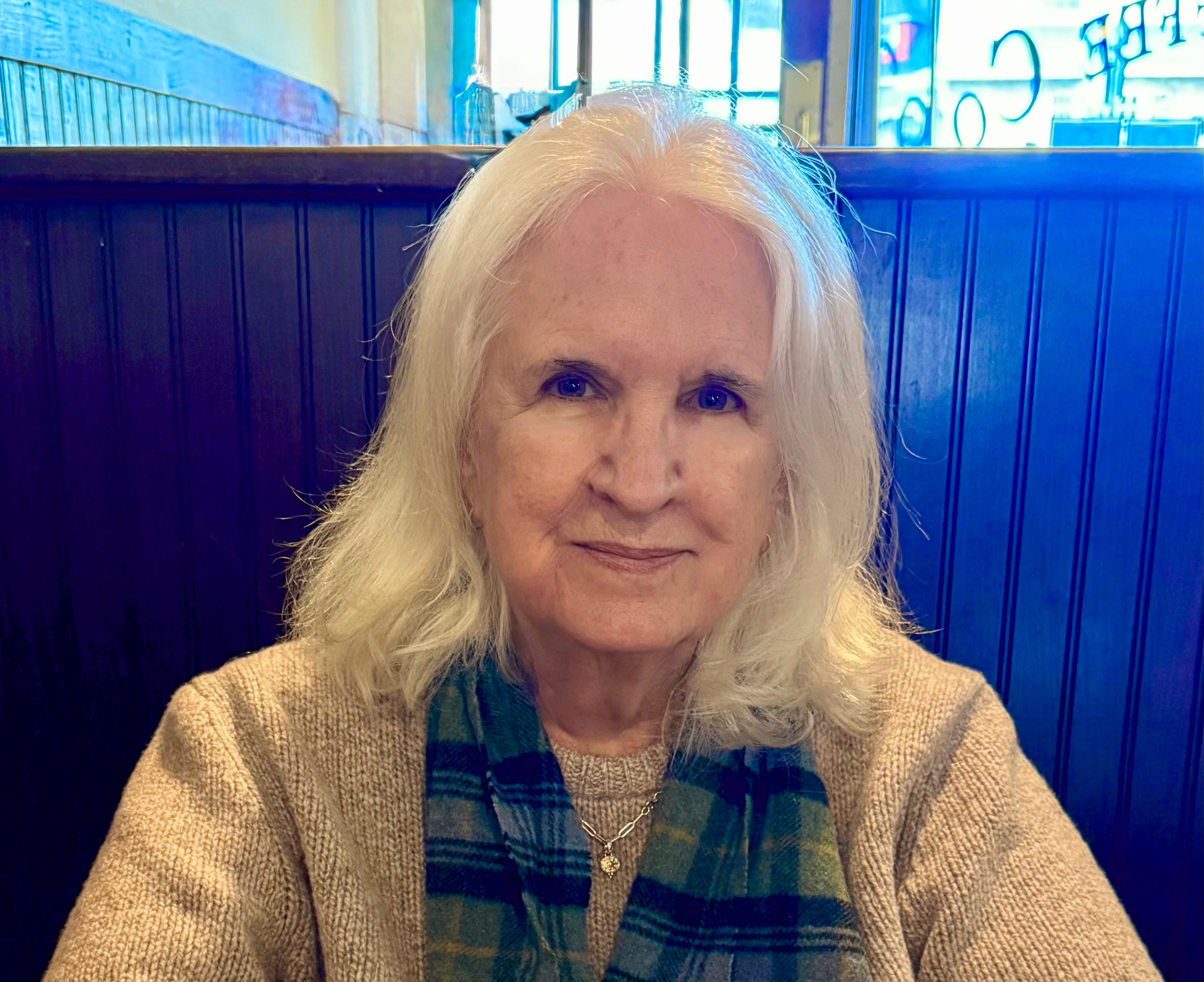
Alice Elliott Dark is the author of the novels Fellowship Point and Think of England, and two collections of short stories, In the Gloaming and Naked to the Waist. She is a professor in the English department and the Director of the MFA in Creative Writing program at Rutgers-Newark. A standalone edition of her short story, “In the Gloaming,” with a new afterword will be published in the Scribner Shorts series in September ’26 and a new novel, Wherever You Are, is forthcoming from Scribner in April ‘27. She writes the newsletter Alice on Sunday.

What are you reading now?
During the semester I am occupied with the writing of my MFA students, and also with reading books for blurbs. However I read a book of my own choice in the tub at night and often drop it into the drink. Right now I am rereading Elizabeth Strout novels. I have waterlogged copies many times over the years and have had to buy new ones. If Liz is seen driving a Bentley, I think we can blame me.
Before this I read Art Work by Sally Mann. She is in her seventies and looking back on decades of her photography practice and habits of mind. It’s a wonderful depiction how much work it takes to realize your vision, and much work exists around the work in terms of organization, contacts, and so on. She details her hundreds or thousands of failed pictures, rejections, disappointments…it’s so important for aspiring artists to know how much of this will inevitably come along.
What are your most beloved books from your youth? Did you ever hide any from your parents?
I never had to hide books; the adults in my world didn’t monitor my reading. My grandparents had a bookshelf at the shore filled with Reader’s Digests and paperbacks by Ian Fleming and James Michener. I was obsessed with the Michener novels and embarrassed by and curious about James Bond. That was when I was nine or ten. A bit earlier I loved A Child’s Garden of Verses and memorized many of the poems. In Sunday school I memorized many psalms and loved them too. I imagined a fate that might have me captive or a prisoner when it would come in handy to have many writings memorized.
What’s your favorite book to reread? Any that helped you through a dark time?
I went through a long period when I reread Brideshead Revisited by Evelyn Waugh every year. I loved the sentences so much, their rhythm and evocation of young love, glamour, and the beauty of the English countryside. I have reread Howard’s End by E.M Forster often in recent years, for pleasure and for teaching. The Nature of Personal Reality by Jane Roberts is another I reread every couple of years. I am taking notes on a future novel and am writing about an experience such as Jane had with the entity, Seth, channeling knowledge through her. I reread Alice McDermott to remind myself of where the bar has been set, and every Christmas I reread A Christmas Carol to prepare for another go round of trying to be good. Each summer I read The Catherine Wheel by Jean Stafford and laugh my head off.
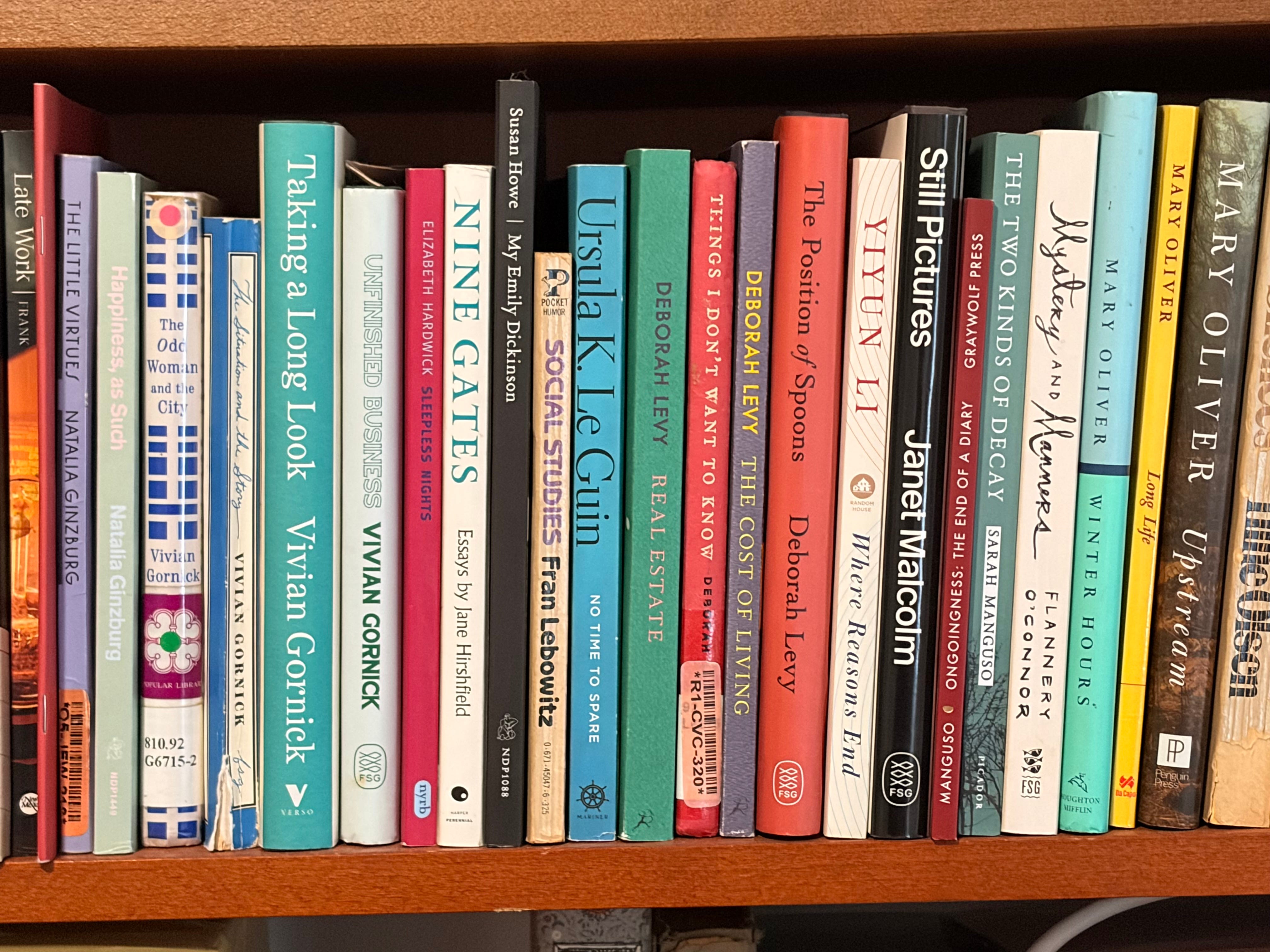
The book I give most is Upstream by Mary Oliver. It sits on a shelf I have of personal writing by women, all short, brilliant books. I dip into these out often, read a few pages, and feel glad to be alive. I am in two reading groups, one fiction and one non. In the fiction group we read a lot of Forster during the pandemic but not Where Angels Fear to Tread, which we are reading now, and I am laughing! The last time I read it was before I read The Ambassadors by Henry James; this time within a few pages I recognized Angels as Ambassadors’ fan fiction. Fun stuff!
In the non-fiction group we most recently read The Price of Democracy by Vanessa S. Willliamson about the history of taxation in this country starting with the Boston Tea Party—who knew the patriots were protesting for taxes? It’s a really great book arguing that democracy cannot exist without a healthy and fair tax system.
I don’t think anything has helped me through a hard time but time passing.
What’s an article of clothing that makes you feel most like you?
I have a ratty old ripped up cotton nightgown that is so soft I can’t part with it. Whatever is continuous about myself becomes cherished when I put it on and get in bed, under either heavy covers or in the summer, under only a sheet. I have bought new pajamas and nightgowns but they end up in giveaway boxes while my transitional object nightgown is washed and worn again.
What’s the best piece of wisdom you’ve encountered recently?
In the documentary “Meet Me Under The Good Light,” Andrea Gibson, wise beautiful person, says to call “everything that you are feeling love” when you are in a painful situation. This hit me so hard; I have taken on the practice, and every time a guilt or regret pops up to chastise me for how I fell short of my expectations as a caregiver, I now call it love. I wouldn’t feel regret and guilt without the love being there in the first place, and this practice makes that the important focus.
Tell me about any special relationship you’ve had with an animal, domestic or wild?
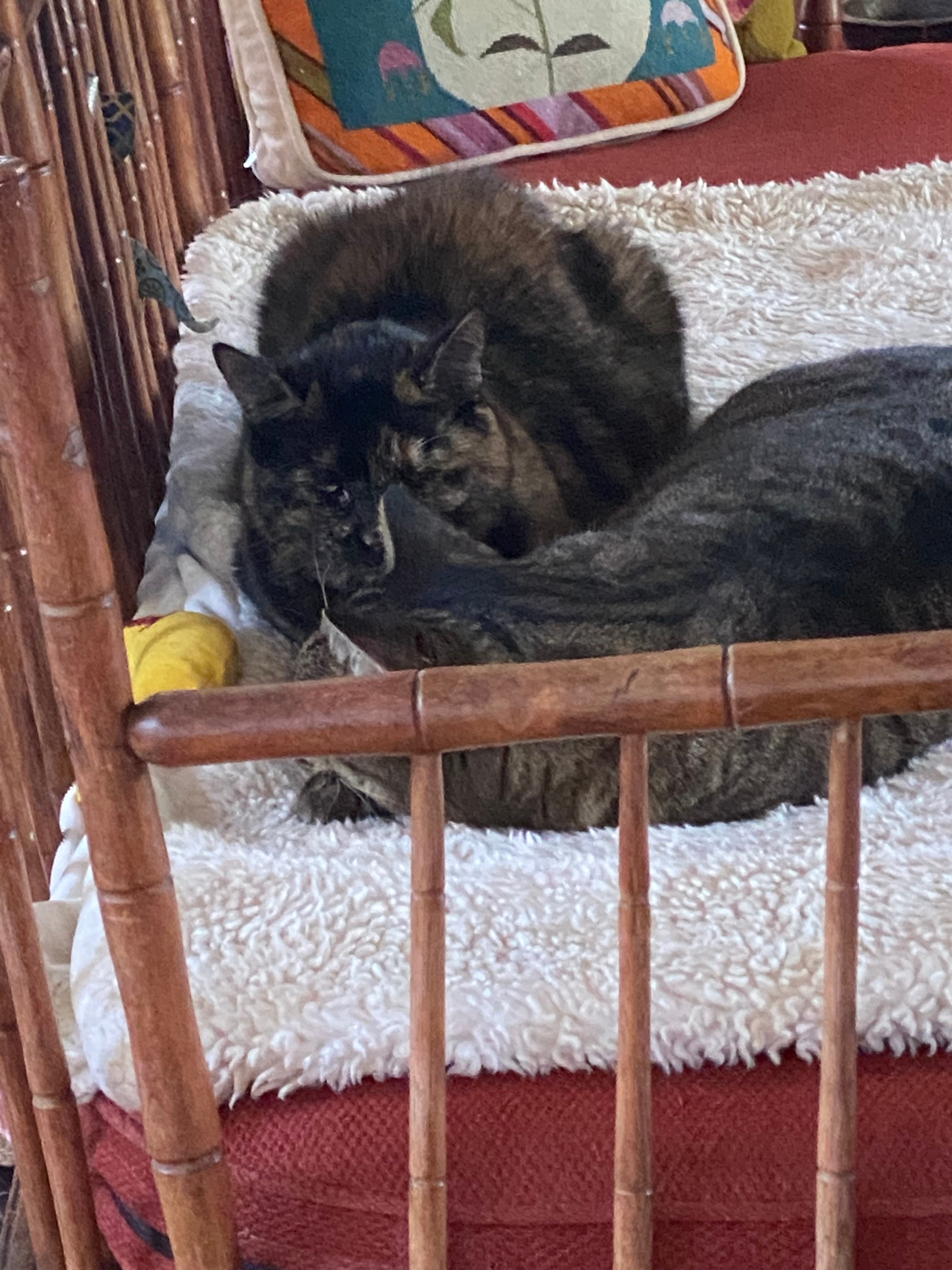
So many. Animals are central to my life and why I am a vegan. Right now I have two cats, one called Mama Newark who is an indoor feral—she has lived with us for nine years and I have never touched her, we communicate through long blinks—and the other is Holly who I adopted from a local shelter to be a friend for both me and Mama after we lost three animal housemates during COVID. Holly is a dogcat who can sense me coming home from work when I am a couple of miles away and goes to the door to greet me. She is a content, happy creature who doesn’t want much affection, but every so often she plops on my computer seeking a long session of compliments and stroking.
I live on a very busy street but have a yard full of animals; deer, possum, racoons, squirrels, birds, chipmunks, cats, bats, and more. I love them all, especially the squirrels. They invent ingenious games, getting the crows involved when they come through.
What’s one thing you are happy worked out differently than you expected?
I went for a long time when I was young thinking marriage wasn’t for me. Turns out that learning one person over decades is humbling, compelling, and a great grace. Turns out, marriage teaches you who you are.
Singing in the shower or dancing in the kitchen? Or another favorite way your body expresses itself?
I don’t let myself do the things my body loves very often. I know, I know. It’s a work in progress. I love to swim and have always thought of myself as a sea creature rather than a land animal.
What are your hopes for yourself?
Retire at 75 in 2028, live by the sea, more cats and dogs, write a few more books, help a few people, read and reread, resist, see the whole California coast, fingers crossed for a grandchild, a painless death. And—I want to put on the red dress, fly over the pond, and go to Folkstone for the Wuthering Heights reenactment.
What’s a kindness that changed your life?
I saw a therapist for 15 years who was only and consistently kind. That’s all she did; she kindly validated my feelings. I would get frustrated with her method and want something rigorous and challenging, but her way helped me. She wore me down! I started being kinder to myself.
What’s a guiding force in your life?
My grandfather had a code that covered just about all areas of life. I carry those sayings in my head. Example: Never lend money, instead give it freely and never think of it again. This applies to so much.
If you enjoyed Alice’s answers, you might also enjoy this one with Maya C. Popa:

Thank you for this wonderful interview. I'm taking three pieces of wisdom from here.
1. Everything that you are feeling love (wow!)
2. Marriage teaches you who you are (so true, and I say this as a divorced, single woman)
3. Never lend money, instead give it freely and never think of it again (brilliant!)
Mama Newark being honored and communicated with by using long blinks. No doubt you both are bilingual in this body language of the heart. 😻
Your grandfather’s wisdom. Yes, give, and never think of it again.
Savoring this as my first read of the morning. A most positive way to begin. Thank you both. 💜